
How to Choose the Best Note Taking Method

My last blog post explained the value of note taking and summed up 13 common mistakes successful students don’t make.
Note taking is necessary to deepen your understanding, improve your recall, write better essays and speed up your revision.
But there are so many note taking methods to choose from that you can become stuck and not take any notes at all.
This blog post explains and evaluates four of the most effective note taking methods:
Mindmaps
The Cornell method
The Outline method
The Structured Analysis method
I also show you my first (optional) step of annotating my notes.
This in-depth post summarises each method with a step-by-step guide for how to take notes in this way along with an image of what they could look like.
Then I take it one step further and take notes from the same piece of text in the four different methods (and one sub-method). This way you can see these note taking methods in action.
After this post you’ll understand the different note taking methods and try out a few for yourselves until you find what works for you.
Mindmaps note taking method
A mindmap is a visual way to represent ideas and concepts. It’s a diagram displaying information and theories around a central idea.
Mindmap uses
Plan an essay
Breakdown a confusing topic
Map out topics for revision
Work out the links between ideas
Illustrate key themes of a module
Organise your thoughts
Brainstorm ideas.
How to create a mindmap
1) Choose your central idea > draw a picture or write a keyword/phrase in the centre of a blank piece of paper
2) Add branches for key themes > decide on the most important words or short phrases relating to your central idea. Add these and connect them to the central idea with thick lines – ‘branches’
3) Add keywords/phrases using sub branches > expand on the key themes by adding sub ideas and information. These could be important dates, examples, authors, models, theories, strengths, limitations, diagrams…etc.
4) Look for gaps and connections > see where you can add more sub branches and info. Look for where you can add lines to show connections between ideas.
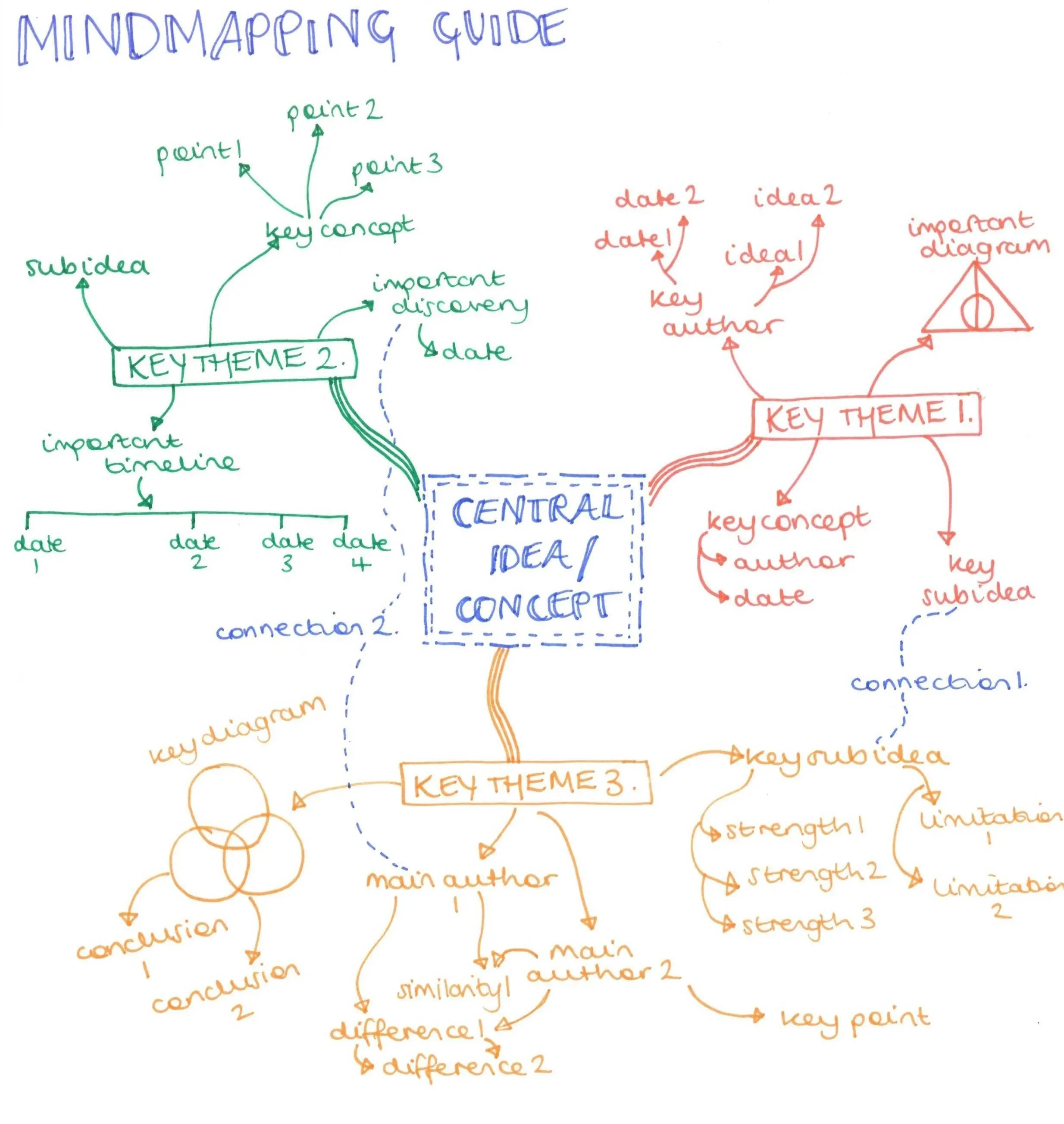
I like drawing my mindmaps as I feel I can be more creative by hand than using computer software. However, there are some great free programmes you can use if you prefer typing notes.
Coggle is an intuitive and well-designed software where you work inside the website itself – so nothing to download. Sign in is with any Google account. Their free account allow for 1 private mindmap and unlimited public mindmaps. You can also collaborate with others in real time. If you want all private mindmaps (I’m not fussed) then you can upgrade for around $5 a month.
XMind is a downloadable software for Windows, Mac and Linux. It’s flexible and powerful and its free version allows for different styles and colours and you can add images and links. For more export and design options you can upgrade for $79 a year.
Mindmap top tips
Use blank paper if you can as lined paper can look messy
Use different coloured pens to distinguish between your main branches. You could draw each main branch and its sub branches in a different colour. Or you could use a different colour for each level of information
Include images, sketches and diagrams to save words and add understanding
Distinguish between branch level using size or design e.g. main branches could be thicker than sub branches
Add dotted lines to show connections between ideas.
Mindmap advantages
Visually interesting form of notes. May look more appealing than linear note taking
Can condense a lot of information into a 1 page mindmap
Creative form removes boundaries and can help you come up with more ideas
Adaptable to suit your needs > personalise them however you want
Shows relationships between ideas
Allows for a deeper understanding of a concept through links and levels
Can improve recall in an exam as you may recall a concept purely from remembering its position in your mindmap
Words and short phrases can trigger recall of longer strands of information.
Mindmap disadvantages
Mindmaps may not be as useful for large amounts of text or very wordy concepts
Can get messy quickly
Can take more time than linear note taking (but the time is worth if if mindmaps are drawn correctly)
It may be difficult to get used to taking notes in this way
Mindmaps are very personal so you may not understand the mindmap of a fellow student or vice versa
You may run out of space as you need to know at the start roughly how much space to give each element
There may not be time to create a mindmap during a lecture.
Mindmap conclusions
Mindmaps can be the perfect solution in some situations. I have remembered a concept in an exam purely because I could picture my mindmap in my head. For modules that have key themes or lots of interrelated concepts they are very useful.
But they can be time consuming and it’s not always possible to create one during a fast paced lecture. I would use them as a supplement to other note taking – as one form that you use regularly. Sum up each block/section of a module with a mindmap, use during revision, use to plan your essays or use when you’re stuck on a concept.
Cornell note taking method
The Cornell note taking method was devised in the 1950s by Walter Pauk, an education professor at Cornell University. This method condenses and organises your notes and encourages you to summarise and review your material for deeper understanding and to help with revision.
How to use the Cornell note taking method
1) First you need to segment your page into 3 sections. The SUMMARY section should take up the bottom 1/5 or 1/4 of the page. Then draw a vertical line separating the rest of the page into two sections, the left taking up 1/3 of the page. The smaller, left-hand column will be your CUE column and the larger, right-hand column will be your NOTES column.
2) Next start writing in the NOTES column. This will either be during class or at home taking notes from your textbook or a video. Here the aim is to record as many key points as possible. Here you should record:
Key words and ideas
Important dates/peoples/places
Diagrams/charts
Formulas
Case studies/examples
Critique - strengths and limitations
3) Once you’ve finished a topic, or at the end of the class, review your NOTES column and pick out the key words/phrases/dates/authors. Then formulate some questions based on your NOTES e.g. what are Pascale’s four principles of complexity theory? Then add these CUES in the left-hand column so they line up with their corresponding NOTES. The aim here is to reduce your NOTES to their essential ideas so you can improve recall.
4) Next you should briefly summarise your NOTES column in the SUMMARY section. Write a few sentences that sum up the main ideas. Think about the following questions:
Why is this information important?
What conclusions can you draw?
This section is really useful for finding information later on and during revision where you want to remember the key ideas from a lecture or section of text.
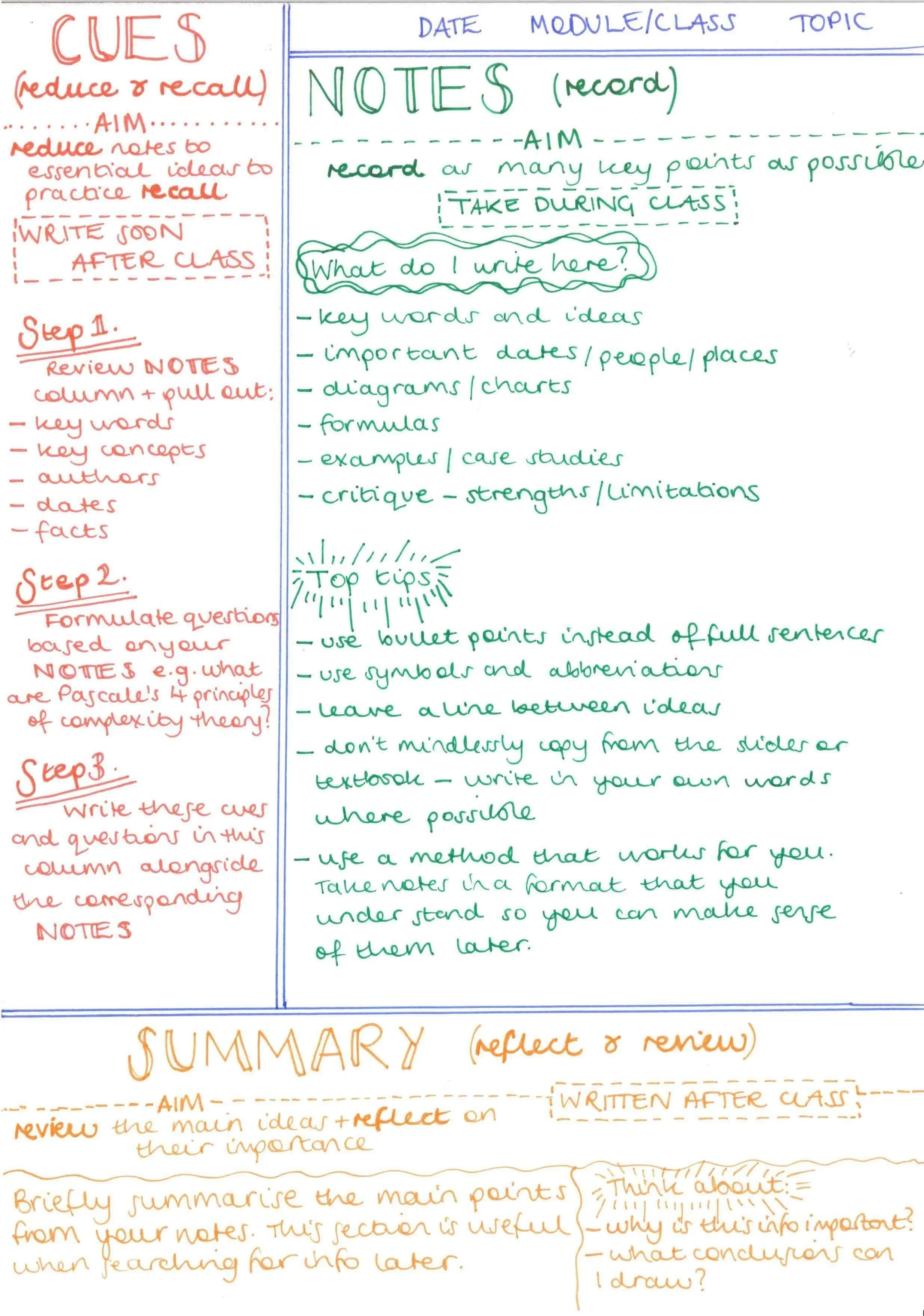
Cornell note taking top tips
Use bullet points or phrases/key words instead of full sentences
Use symbols and abbreviations
Leave a line between main ideas
Draw quick diagrams if they sum an idea in less space than words
Don't mindlessly copy from the textbook or slides. Try to write in your own words where possible as this helps to improve recall
Use a method that works for you. Take notes in a format you understand so you can make sense of them later.
Cornell note taking uses
Cover up the NOTES and SUMMARY sections and try to recall most of the information just by looking at the CUE column and answering the questions
Cover up the NOTES and CUE sections and try to fill in the gaps and details just using the SUMMARY section.
Cornell note taking advantages
Flexible so can write in any format and add diagrams/charts...etc.
A neat way of organising notes
Other methods (e.g. Outlining) can be incorporated into the method
The CUE column allows for effective revision when trying to RECALL notes
Creates effective study and revision sheets
Relatively easy to create a template for typed note taking
Gain a deeper understanding of the material by summarising and condensing it in various ways.
Cornell note taking disadvantages
Method limits your space - might be hard to fit everything on one page
If you don't spend time reviewing the sheets the extra work becomes pointless
It's a more time consuming form of note taking but its proper use is valuable
May be difficult knowing what to write in the NOTES and CUES column
Could get messy quickly
Without a template this method is difficult on a computer.
Cornell method conclusions
The Cornell note taking method is a very valuable way of taking notes IF you spend the time reviewing the material. This method creates your revision notes for you so you don’t have to rewrite your notes.
But it may be too time consuming for some students. If you find you have too much to write then you could adapt the template and move the SUMMARY section to the natural end of your notes instead - perhaps more than one page.
Outlining note taking method
The outlining method of note taking organises notes into hierarchies of points. This method uses text indentation to distinguish between main points, sub points and details. Points to the left of the page are broad with more detailed points to the right.
How to use the outlining method
1) A general outlining method could be:
“main topic > sub topic or key concept > supporting detail”
Feel free to add more levels to suit your course.
2) Record information as you hear it during a lecture or as you’re reading your textbook. You may be given an outline by your lecturer or use your judgement to decide where information should be included.
3) After the session check your notes for understanding. If necessary, quickly rewrite.
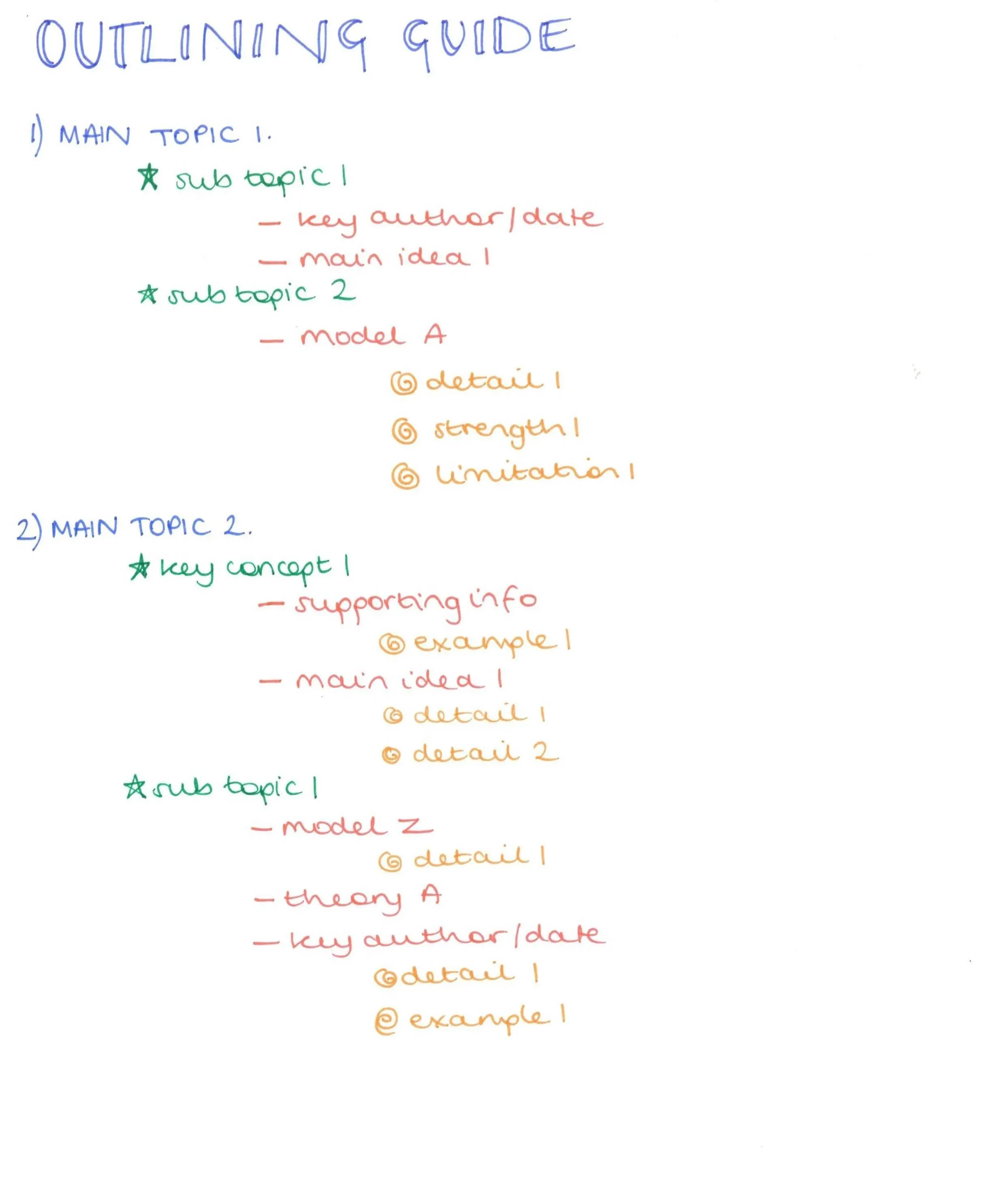
Outlining top tips
Create your own key for your levels so you can quickly decide where to put models, theories, dates, examples, strengths, limitations, authors...etc
Distinguish between the levels using different coloured text or symbols
Leave space between each topic so you can go back later and add additional information.
Outlining uses
Useful for revision. Cover up the points below each main topic point and try to recall the supporting details
Create an essay plan. List the main points you want to cover then use indentations to record the supporting points, examples and details you plan to include.
Outlining advantages
More effective than note taking in a paragraph style
A quick and relatively simple note taking method
Useful for subjects where it's important to pick out the main points as well as remember the details
Easy to skim - distinguishes between key ideas and supporting details
Creates neat study sheets for effective revision
Outlining disadvantages
May make mistakes and record things at the wrong level. This doesn't matter but mistakes can stress some people
Outlining may look messy if you need to add lots of information in after
Could waste time if you choose to rewrite them
May take awhile to get used to this method
May be hard to record legible notes quickly.
Outlining conclusions
This is a great basic method of note taking to try and step away from just writing in paragraphs. It can be hard to skim read paragraphs and pick out the important points. Moving towards outlining allows for this.
It can take a little while to get used to and can sometimes get a bit messy but once you’ve worked out which bits of information you want at each level it becomes quick and intuitive. It’s also a great method as you can combine it with others, such as the Cornell method and my Structured Analysis method.
Structured Analysis note taking method
Structured Analysis is the name I’ve given to note taking where deeper analysis and critique is included alongside the recording of information. This method gives you more than surface level understanding of your notes by prompting you to go deeper and investigate the material further.
How to use the Structured Analysis note taking method
1) Divide your page into two columns. The left-hand column is for NOTES and should be twice as big as the right-hand column for REMARKS.
2) Take your notes as normal in the left-hand column. This column is where you should include:
Key points, theories, concepts
Authors and dates
Models, diagrams, formulas
Examples and case studies
3) Add remarks and analysis to the right-hand column to enrich your notes and deepen your understanding. Things to include here:
Strengths and limitations of the theories
Reflections and what the material has taught you
Links to other material - inside and outside the course
Links to your previous knowledge or experience e.g. does this apply to a part of your job?
Comparisons with other theories - which is most useful?
Limitations or caveats - is this theory only useful in a certain context or situation?
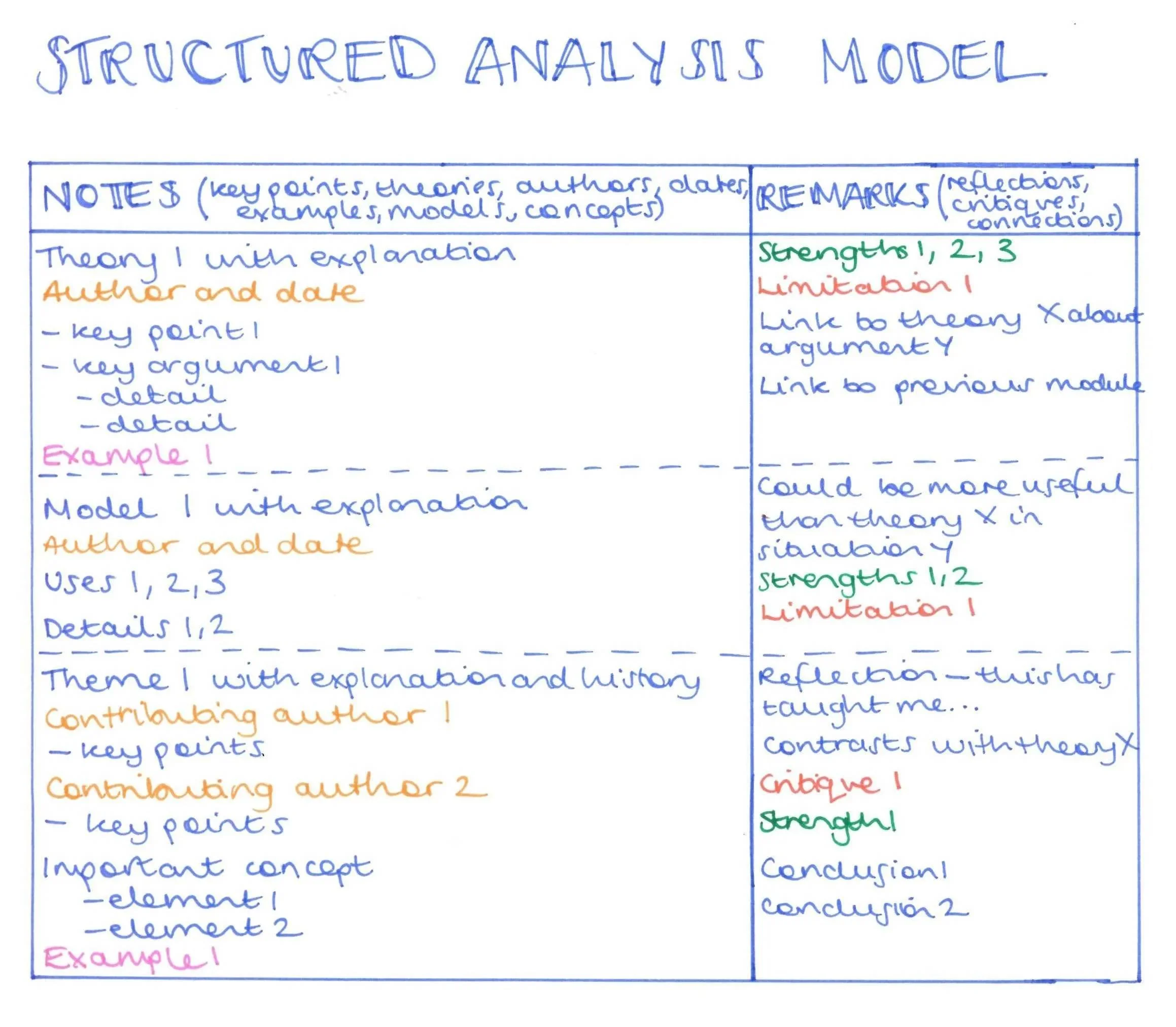
Structured analysis top tips
Use different colours to distinguish between different types of information e.g. red for limitations, green for strengths...etc.
Line up your NOTES and REMARKS
Leave space to add more points later
Separate each main point/theory with a line to stop confusion
Vary the column width if you find yourself regularly running out of room in one column.
Structured Analysis uses
Plan a better essay quicker with more detailed notes
Revise more effectively from structured and clear notes
Determine the value of a concept/theory by evaluating the evidence you've found.
Structured Analysis advantages
Valuable for subjects that require you to analyse the strengths and limitations of theories, reflect on your learning and make connections between concepts
Gives you a deeper understanding of the material which can lead to higher essay and exam scores
Can be adapted to suit your needs. Be flexible about the elements to include in the REMARKS column
Gives you space to add further analysis as you go through the module
Flexibility on note taking method. Outlining could be incorporated and used in the left-hand column
A great method for both handwritten and typed notes.
Structured Analysis disadvantages
May not be necessary for subjects that don't require critical thinking or reflection
Is more time consuming than other methods e.g. outlining
Could be messy if you have to add lots more points (though not a problem if typing your notes).
Structured Analysis conclusions
If you have to think for yourself, add reflections, think critically or link between material then this method can be very valuable. In my business modules marks were awarded in assignments and essays for critical thinking and reflection. With the Structured Analysis method you do this at the same time as note taking which can save time later.
The act of adding remarks and analysis to your notes can be incorporated into other note taking methods but this system reminds you to do it. If you’re studying a science or engineering type module this method may be less useful but it can always be adapted to include whatever’s necessary in the remarks column.
A note taking sub method - annotating to work out what's important
If you struggle to work out what’s important to take notes on then this sub-method may help as a first step.
1) Look at the essay question and guidance for the block. Can you tell which sections of the material are the most important? If this isn’t clear then ask your tutor. Note these down on a sticky note or mark the pages in the book. Now you know which sections you should spend the most time studying.
2) Start reading and highlight what’s important. Read a small section, a few paragraphs to a page or so. Highlight what you think sounds important. Some paragraphs may be full of key information such as lists or models. Others may be simply educated waffle or background information with no points that seem useful for an assignment or essay.
3) Add any extra notes to the margins. If relevant thoughts come to you while highlighting add them to the margin. These could be links to another theory or theorist, strengths or limitations, examples, reflections…etc.
4) Take these notes and move onto your chosen note taking method. Now you have started to work out what’s important you can move onto proper note taking. Choose one of the four methods above (or a combination of them) and use your highlighted/annotated notes as a starting point.
This sub-method forces you to write your notes in your own words. Copying out just the highlighted sections wouldn’t make sense so you must form your own sentences and bullet points from what YOU’VE decided has value.
Top tip
You’re looking for mindFUL highlighting not mindLESS. Take care to not highlight everything as writing word-for-word notes is a waste of time.
Now I’ve explained the various methods I want to show you them too.
I took some text from my last module and took notes on it using the four (and a half) different note taking methods.
Here’s the extract I’m using, already annotated using my sub method.
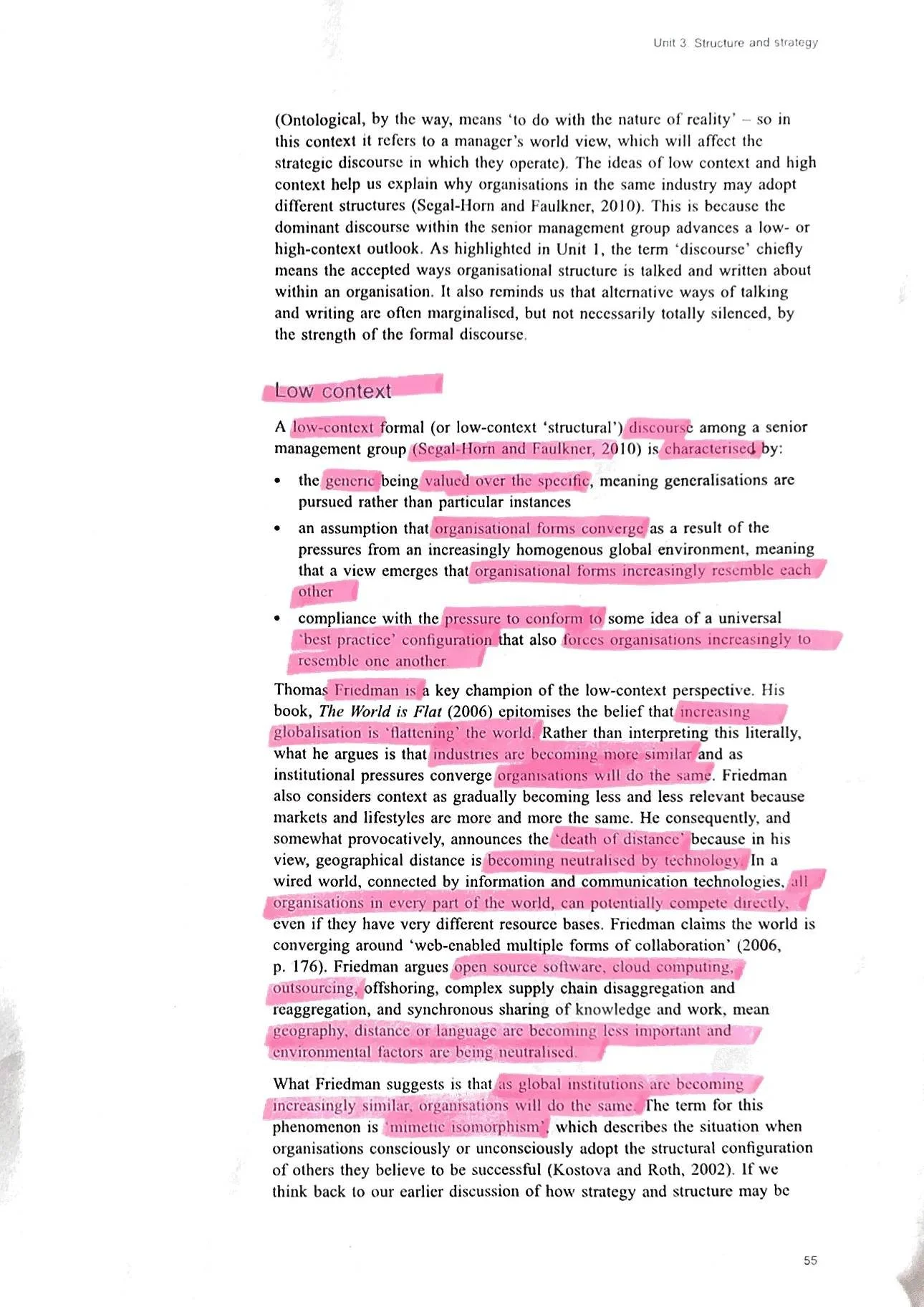
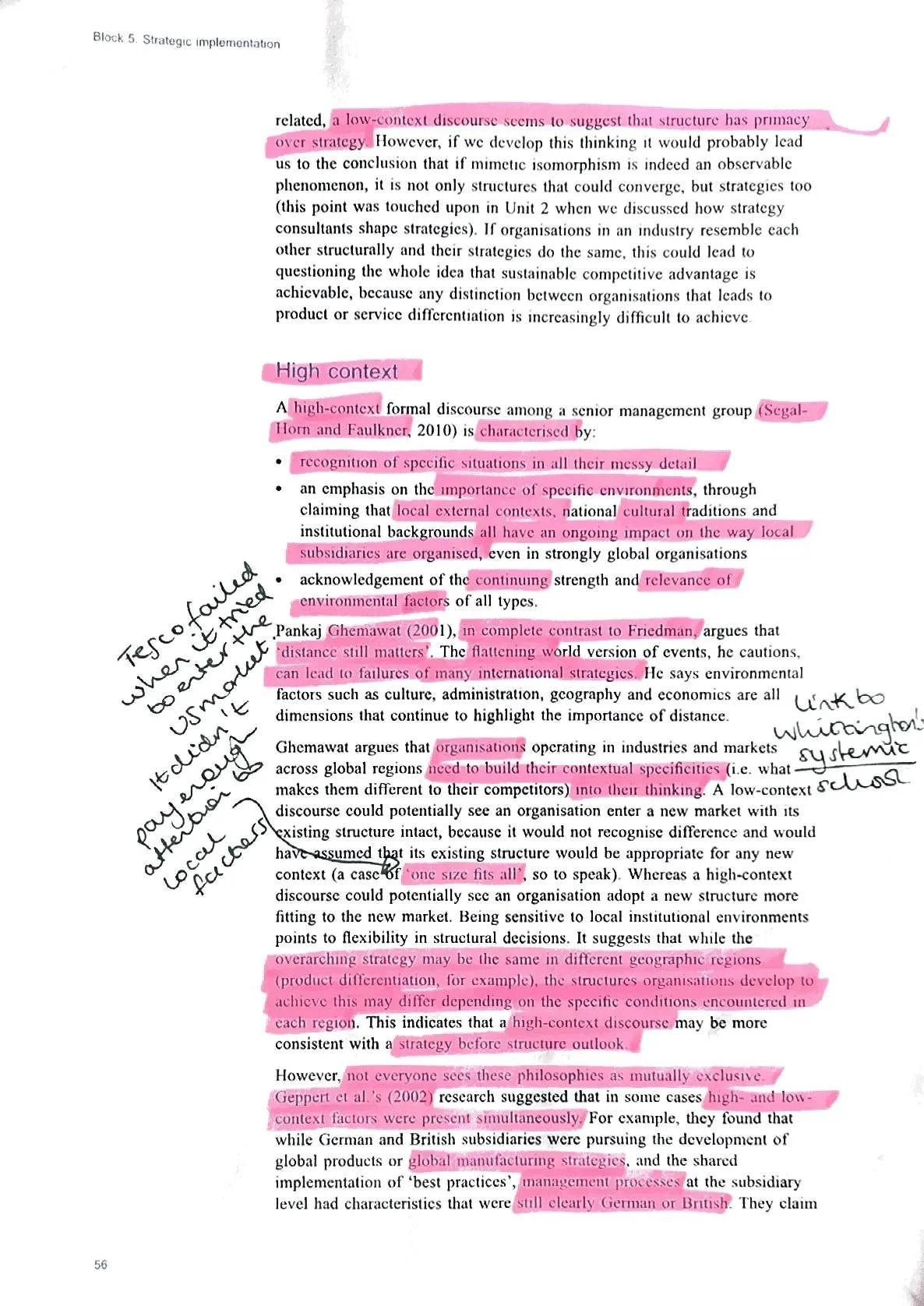
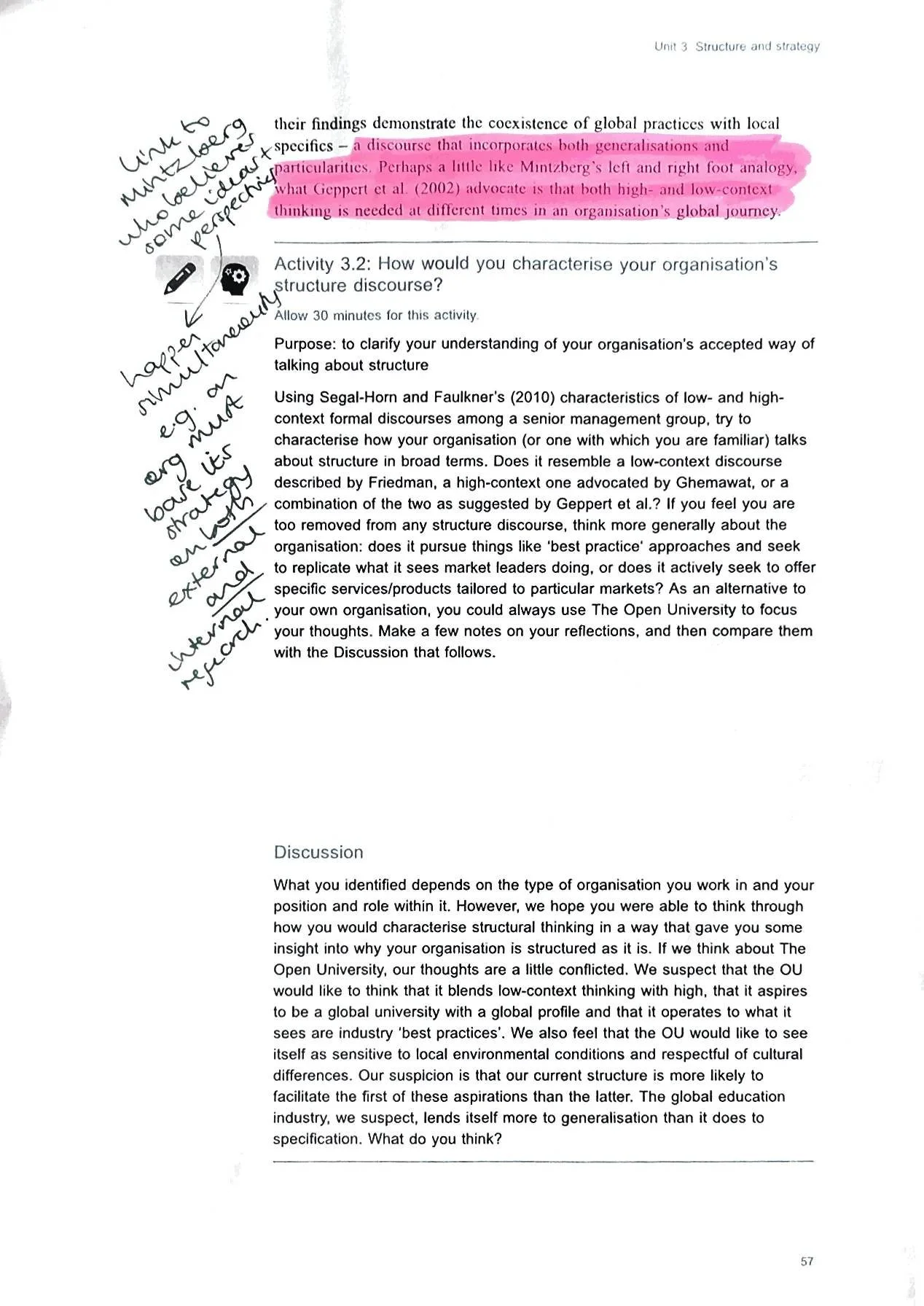
And here's the timelapse video of me taking the notes.
Below are the timelapse videos of me taking the notes with a few comments about how I got on.
Mindmap note taking
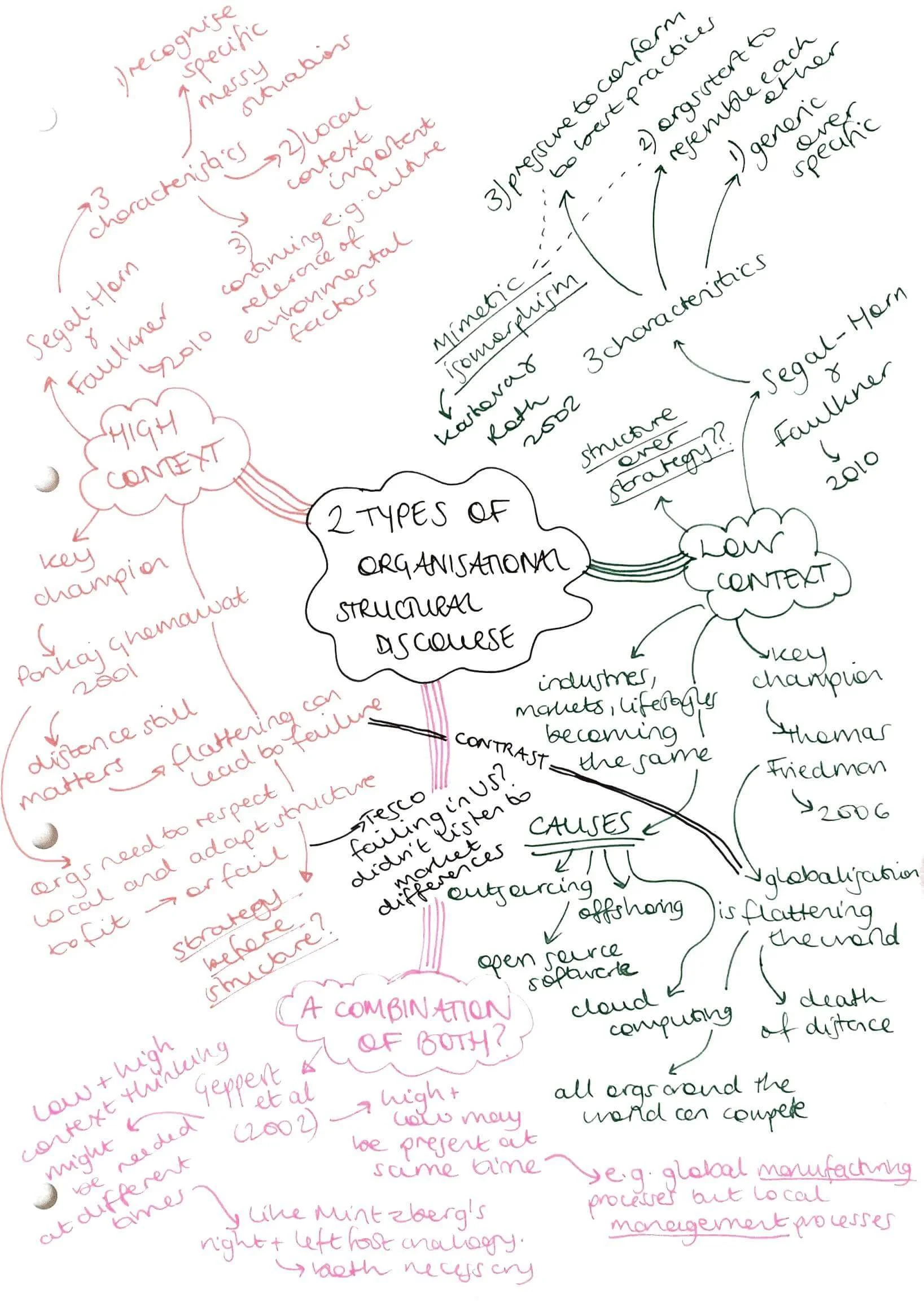
I’m happy with how this mindmap looks but I found it difficult. I struggled to work out where to put each point and I was worried I’d run out of space. It was also hard to make this on the spot so I wouldn’t recommend doing this in class or on the first time of reading through something. After trying out this method I would use it for some note taking, such as block summaries, revision and essay planning, but I would pick another method for day-to-day note taking.
Cornell note taking
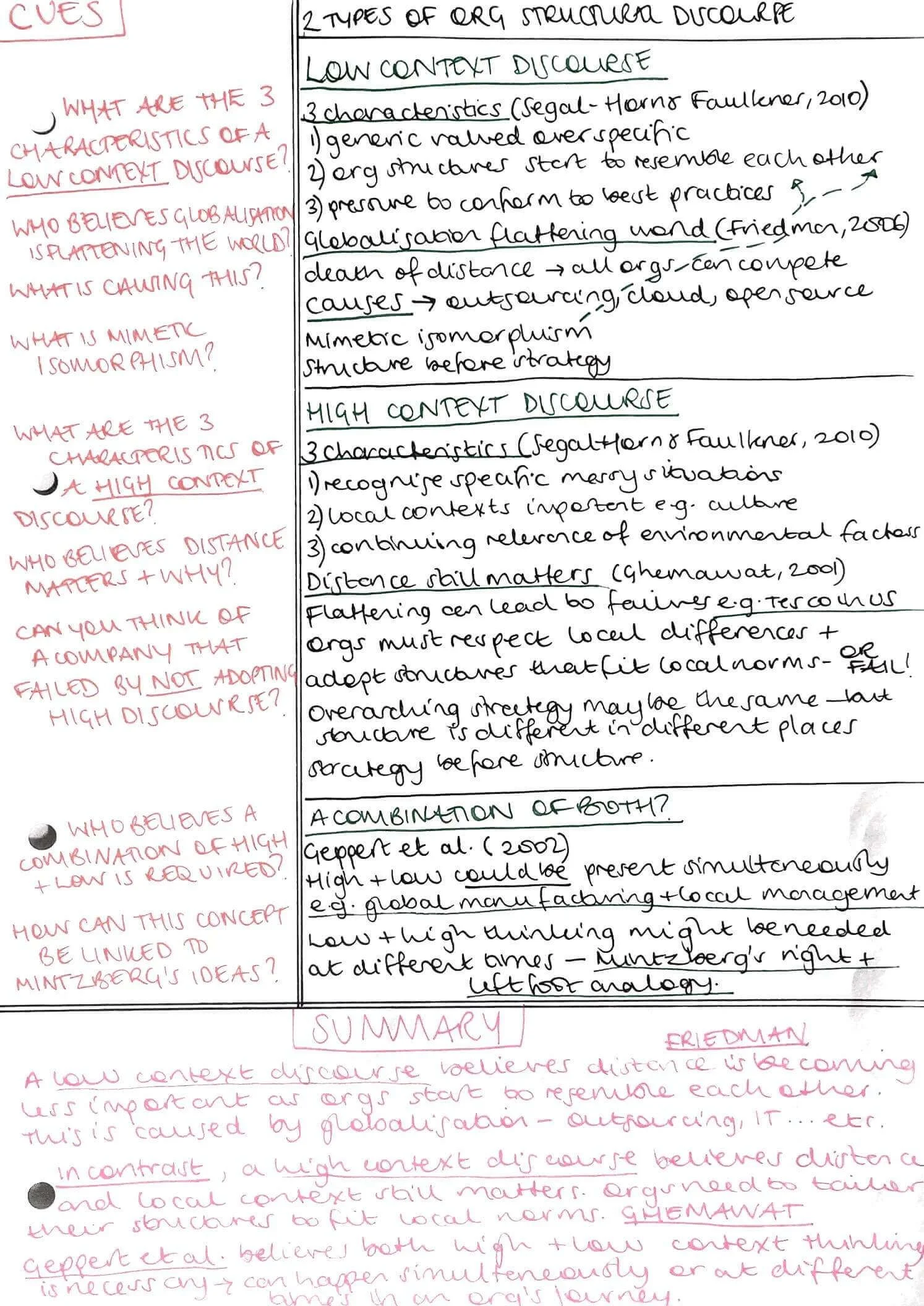
This method took the most time as there were two additional sections to write after the notes. However, I found this method the most rewarding. Forcing your brain to rewrite your notes in different formats really helps with recall. Creating questions from your notes will give you a revision method. Then summarising them in a few sentences will help you condense the material further. By reviewing the cues and summary often your recall should improve which is great for exams. I did struggle with space a little and I forgot to add spare lines so I think I would adapt the format by adding the summary box only when I’ve finished note taking, which might be after 1 page or after 2 or 3 for a longer subject.
Outlining note taking
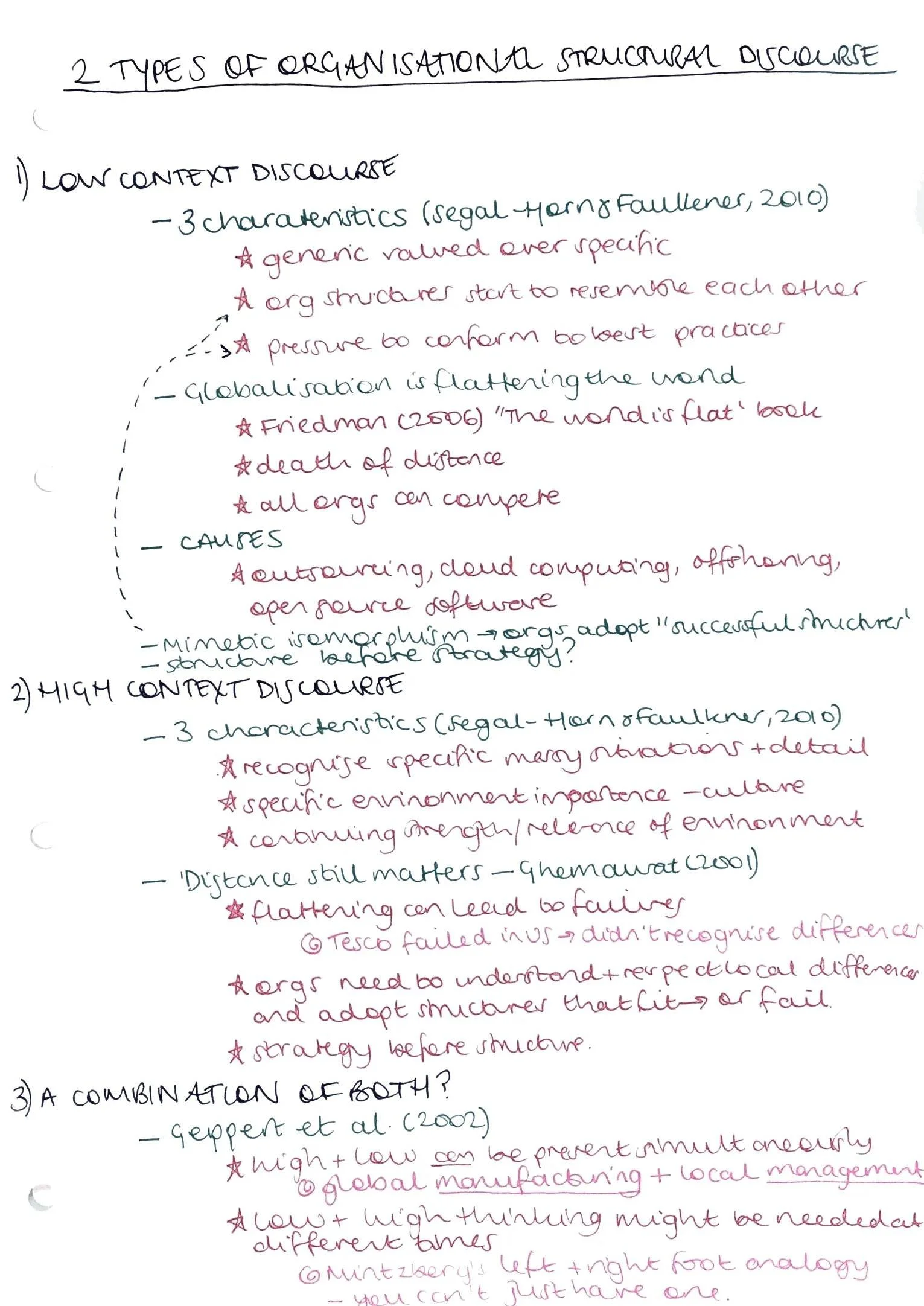
This was the simplest and shortest method I tried. I had a few wobbles where I couldn’t work out which level to put some information but I think, with practice, this could be a great day-to-day method. Also, you can take this format and use it for the note taking section of the Cornell method and the Structured Analysis method.
Structured Analysis note taking
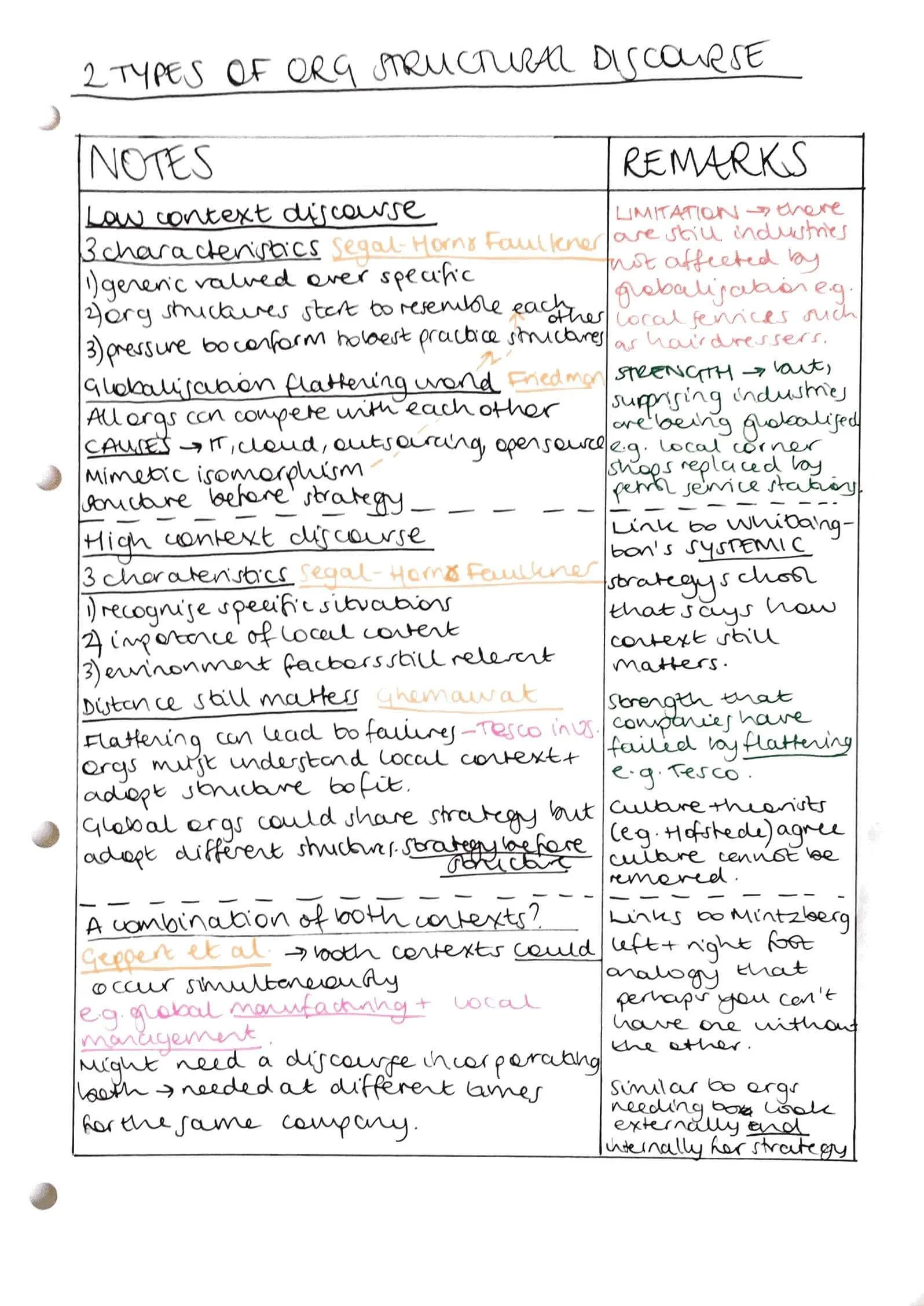
This method is similar to outlining and the notes section of the Cornell method but has the added bonus of deeper analysis. Having a specific section for further remarks and analysis prompts you to add value. However, for modules where you don’t need to dive deeper, think of examples or think critically it may be a waste of time.
After reading this blog post I hope you understand the different methods of note taking a little more.
I hope showing you examples will help you decide which method you want to use. Don’t be afraid to try a few out and be a little creative. It can take awhile to find the right method for you but once you’ve found it you’ll have a deeper understanding of the material and you’ll recall more information in your exams.